
Infographic: Monitoring Meltdown

Anand Akela

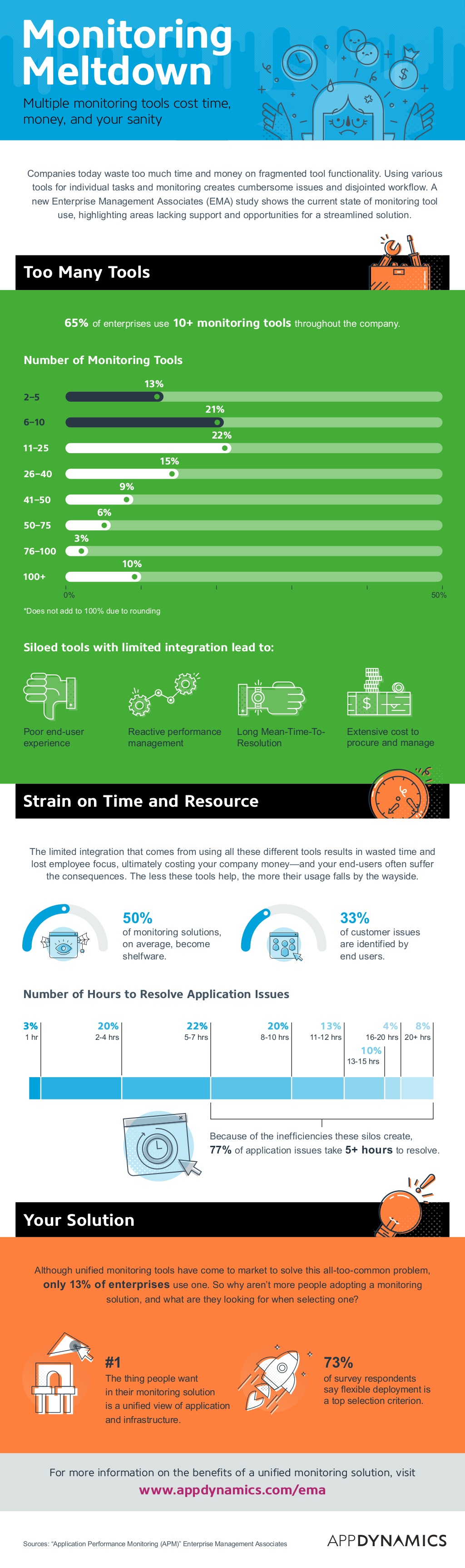
Companies today waste too much time on fragmented tool functionality. The infographic below, based on an Enterprise Management Associates (EMA) study, shows the current state of monitoring tool use.

Hot Topics

The Latest

Rapid AI adoption and the unique ways AI workloads operate is redefining the scope and structure of what these teams must deliver. This shift is forcing organizations to rethink how they manage scale, automation, and control, according to The State of SRE and Platform Engineering 2026, a new report from Dynatrace ...

AI is usually talked about as a software tool, but it also depends heavily on the network behind it. Whether a company is using AI for chatbots, automation, monitoring, analytics, or employee support, all of that information has to move across the network in a reliable and secure way. That means AI is not just an application decision. It is also an infrastructure decision. Before organizations rush into AI, they should ask a simple question: Is our network ready to support it? ...

Enterprise AI often lacks governed access to where business processes actually execute. Without that access, AI agents may be able to reason, but they cannot operate reliably across enterprise workflows. For AI agents to effectively carry out workflows, they will require integration-layer context and controls. Organizations can implement these prerequisites by providing AI with managed access to the middleware layer ...

Enterprise networks rarely behave the same way for very long. A routing adjustment in one region may unexpectedly alter application performance in another. A cloud migration may introduce hidden dependencies that go unnoticed until an outage occurs. All the while, the network is managed by several different teams, each of whom use different tool sets — and as a result, have different views of the network ... There’s usually an engineer who remembers why traffic fails over a certain way between sites, or which transparent firewall was added where. The problem is that human memory cannot scale alongside enterprise-scale networks ...

Ask an infrastructure team how confident they are in their ability to govern AI, and most will tell you they've got it handled. A recent survey of 406 IT decision-makers and platform engineering leaders found 86% expressing exactly that confidence. Ask the same group whether they have a formal written AI governance policy, and the number drops to 30%, according to Spacelift's Infrastructure Automation Report ...

Infographic: Monitoring Meltdown

Anand Akela

Companies today waste too much time on fragmented tool functionality. The infographic below, based on an Enterprise Management Associates (EMA) study, shows the current state of monitoring tool use.


Hot Topics

The Latest

Rapid AI adoption and the unique ways AI workloads operate is redefining the scope and structure of what these teams must deliver. This shift is forcing organizations to rethink how they manage scale, automation, and control, according to The State of SRE and Platform Engineering 2026, a new report from Dynatrace ...

AI is usually talked about as a software tool, but it also depends heavily on the network behind it. Whether a company is using AI for chatbots, automation, monitoring, analytics, or employee support, all of that information has to move across the network in a reliable and secure way. That means AI is not just an application decision. It is also an infrastructure decision. Before organizations rush into AI, they should ask a simple question: Is our network ready to support it? ...

Enterprise AI often lacks governed access to where business processes actually execute. Without that access, AI agents may be able to reason, but they cannot operate reliably across enterprise workflows. For AI agents to effectively carry out workflows, they will require integration-layer context and controls. Organizations can implement these prerequisites by providing AI with managed access to the middleware layer ...

Enterprise networks rarely behave the same way for very long. A routing adjustment in one region may unexpectedly alter application performance in another. A cloud migration may introduce hidden dependencies that go unnoticed until an outage occurs. All the while, the network is managed by several different teams, each of whom use different tool sets — and as a result, have different views of the network ... There’s usually an engineer who remembers why traffic fails over a certain way between sites, or which transparent firewall was added where. The problem is that human memory cannot scale alongside enterprise-scale networks ...

Ask an infrastructure team how confident they are in their ability to govern AI, and most will tell you they've got it handled. A recent survey of 406 IT decision-makers and platform engineering leaders found 86% expressing exactly that confidence. Ask the same group whether they have a formal written AI governance policy, and the number drops to 30%, according to Spacelift's Infrastructure Automation Report ...