

Two APM Takeaways from Velocity Santa Clara 2014

Denis Goodwin

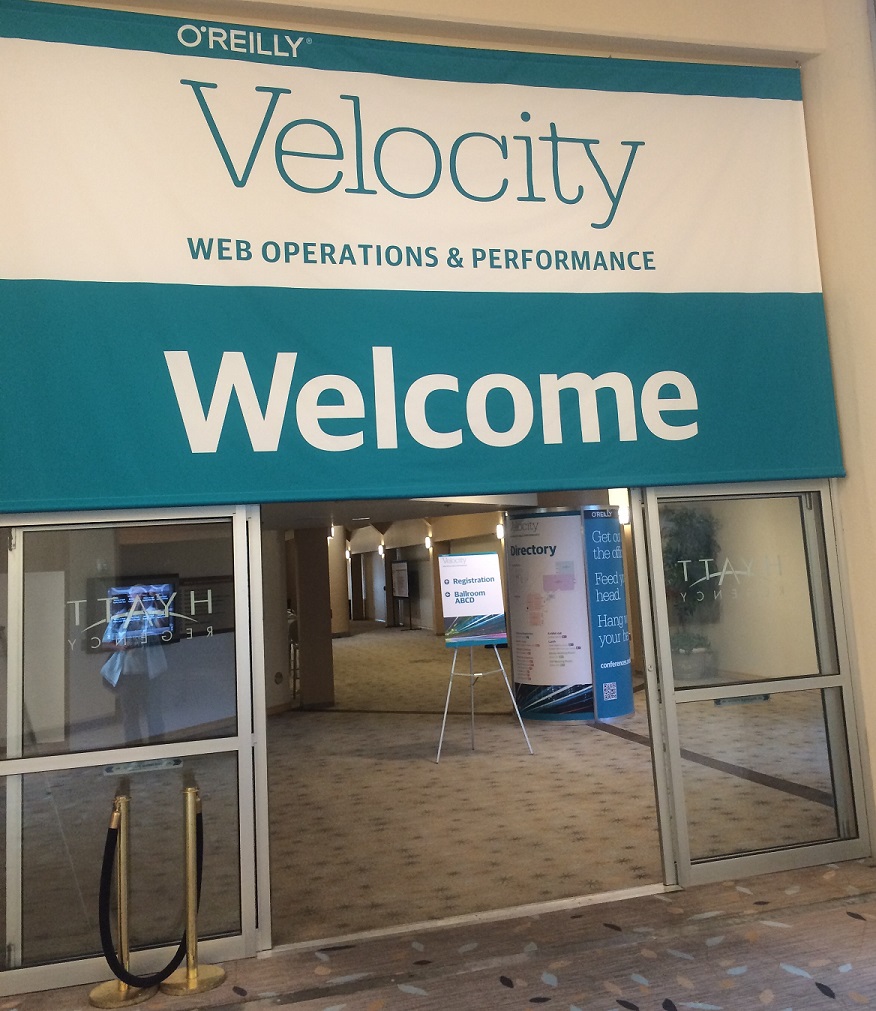
Last week my team and I spent several days at the Velocity conference for web application and performance – arguably the one place where the most technical of performance folk and the most business focused web folk come together and focus solely on application performance. Anyone with a vested interest is there to learn, debate and show off their latest and greatest products and ideas. As the team and I spent time talking to customers, attending sessions and visiting vendors I was struck by a couple of interesting trends that seemed to stand out.

1. Continuous Development/Integration + Tools Fragmentation

Interestingly enough, while everyone was talking about continuous integration, very few solutions actually play well with each other – never mind being integrated in the same platform. I was particularly struck by the tremendous amount of fragmentation in the market. A lot of vendors are solving just one part of the problem. As the CEO of one exhibitor said to me when I pressed him on this point: the specific pain points and their separate solutions represent a big enough problem as it is – solving the larger problem of bringing all the parts together is almost insurmountable at this particular moment in time for this market lifecycle. This is true for almost every APM vendor in the marketplace today.  

Many of the folks I spoke with at the show are using several solutions simultaneously in order to measure all different parts of the full APM spectrum — user experience, performance, and availability. This seemed at odds with the buzz around DevOps and continuous integration and delivery. If users aren’t able to standardize on a common tool to monitor their production web apps and APIs, how can they possibly be consistent in measuring the quality of their user’s experience while delivering those apps via continuous integration? If there are multiple tools being used to measure user experience via synthetic and real monitoring and load testing in production, how many are being added in pre-production environments? How does a team know what the varied data is showing them if each tool only shows an individual part on its own terms?

2. Load Testing = Very Popular Topic

It was interesting to see load testing get as much emphasis as it did, among both vendors and attendees. What really seemed to generate excitement was the importance of tightly connecting both load testing and synthetic monitoring.  Companies need the ability to apply load against their applications for a simultaneous understanding of the user experience – before going live. Without the ability to empathize with the end user, companies can never confidently deploy their applications. The move to continuous delivery and integration only amplifies the importance of stressing your applications on a regular basis and the need for tools that enable efficient load tests. It also calls for excellent diagnostic tools to facilitate fixes and so facilitate time to market.

Is it possible that what’s old is new again? Does continuous integration and delivery require a new way of doing old things? Is it simply applying the same approach to multiple environments simultaneously? It seems that bringing a consistency to measurement and assessment methodologies across environments, coupled with continuous assessment and feedback, is a key to ensuring that your software improves with each iteration. Equally important is an easy to deploy toolset that is accessible and provides insights to users developing applications as well as those supporting them in production.

Denis Goodwin is Director of Product Management, APM, AlertSite UXM, SmartBear Software.
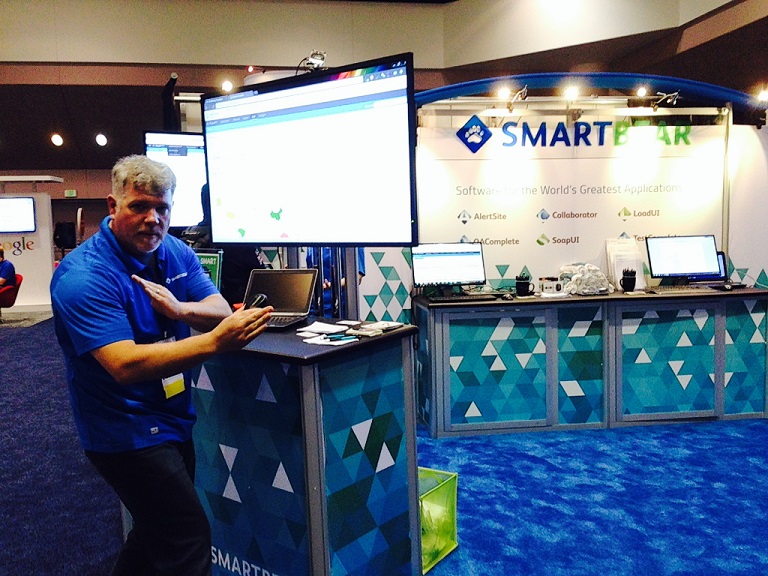

Denis Goodwin at Velocity 2014

Hot Topics

The Latest

Enterprises today operate in a real-time environment where uninterrupted access to trusted data has become a baseline expectation for users, applications and automated systems. Traditional DataOps models, built on manual effort and human triage, cannot keep pace with this always active demand. AI agents are emerging as the operational backbone, ensuring consistent data availability, reinforcing trustworthiness and enabling a level of scale that manual processes cannot achieve ...

For decades, trust in the digital workplace rested on familiar signals. We trusted faces on video calls, voices on the phone, and emails that appeared to come from people we knew. These cues felt human and intuitive. They anchored how decisions were made, approvals were granted, and access was authorized. AI-powered deepfakes have quietly broken that model ...

Cloud migration was supposed to be a one-way door. For most enterprises, it turns out it isn't. Cloud data repatriation is a real and growing trend. A new survey ... finds that 89% of organizations plan to expand their on-premises infrastructure footprint over the next two years — and 75% have already moved at least some workloads back from public cloud in the past 24 months. The findings point to a broad rethinking of where data belongs ...

Over the past few years, large language models (LLMs) have revolutionized the software industry. Given their ability to excel at multi-step reasoning, LLMs have helped enterprises streamline workflows and adapt to the unknown. However, employing such models comes with sky-high costs, latency issues, and limited flexibility. In the realm of IT operations, it is generally wiser to employ smaller, domain-specific models instead ...

For years, DevOps teams operated under a simple assumption: collect enough telemetry, and you can find and fix any problem. That assumption is breaking down. Modern enterprises now operate across microservices, hybrid cloud environments, APIs, Kubernetes, and highly automated delivery pipelines. Releases happen continuously, dependencies shift constantly, and failures spread faster than teams can diagnose them ...

Two APM Takeaways from Velocity Santa Clara 2014

Denis Goodwin

Last week my team and I spent several days at the Velocity conference for web application and performance – arguably the one place where the most technical of performance folk and the most business focused web folk come together and focus solely on application performance. Anyone with a vested interest is there to learn, debate and show off their latest and greatest products and ideas. As the team and I spent time talking to customers, attending sessions and visiting vendors I was struck by a couple of interesting trends that seemed to stand out.


1. Continuous Development/Integration + Tools Fragmentation

Interestingly enough, while everyone was talking about continuous integration, very few solutions actually play well with each other – never mind being integrated in the same platform. I was particularly struck by the tremendous amount of fragmentation in the market. A lot of vendors are solving just one part of the problem. As the CEO of one exhibitor said to me when I pressed him on this point: the specific pain points and their separate solutions represent a big enough problem as it is – solving the larger problem of bringing all the parts together is almost insurmountable at this particular moment in time for this market lifecycle. This is true for almost every APM vendor in the marketplace today.  

Many of the folks I spoke with at the show are using several solutions simultaneously in order to measure all different parts of the full APM spectrum — user experience, performance, and availability. This seemed at odds with the buzz around DevOps and continuous integration and delivery. If users aren’t able to standardize on a common tool to monitor their production web apps and APIs, how can they possibly be consistent in measuring the quality of their user’s experience while delivering those apps via continuous integration? If there are multiple tools being used to measure user experience via synthetic and real monitoring and load testing in production, how many are being added in pre-production environments? How does a team know what the varied data is showing them if each tool only shows an individual part on its own terms?

2. Load Testing = Very Popular Topic

It was interesting to see load testing get as much emphasis as it did, among both vendors and attendees. What really seemed to generate excitement was the importance of tightly connecting both load testing and synthetic monitoring.  Companies need the ability to apply load against their applications for a simultaneous understanding of the user experience – before going live. Without the ability to empathize with the end user, companies can never confidently deploy their applications. The move to continuous delivery and integration only amplifies the importance of stressing your applications on a regular basis and the need for tools that enable efficient load tests. It also calls for excellent diagnostic tools to facilitate fixes and so facilitate time to market.

Is it possible that what’s old is new again? Does continuous integration and delivery require a new way of doing old things? Is it simply applying the same approach to multiple environments simultaneously? It seems that bringing a consistency to measurement and assessment methodologies across environments, coupled with continuous assessment and feedback, is a key to ensuring that your software improves with each iteration. Equally important is an easy to deploy toolset that is accessible and provides insights to users developing applications as well as those supporting them in production.

Denis Goodwin is Director of Product Management, APM, AlertSite UXM, SmartBear Software.


Denis Goodwin at Velocity 2014

Hot Topics

The Latest

Enterprises today operate in a real-time environment where uninterrupted access to trusted data has become a baseline expectation for users, applications and automated systems. Traditional DataOps models, built on manual effort and human triage, cannot keep pace with this always active demand. AI agents are emerging as the operational backbone, ensuring consistent data availability, reinforcing trustworthiness and enabling a level of scale that manual processes cannot achieve ...

For decades, trust in the digital workplace rested on familiar signals. We trusted faces on video calls, voices on the phone, and emails that appeared to come from people we knew. These cues felt human and intuitive. They anchored how decisions were made, approvals were granted, and access was authorized. AI-powered deepfakes have quietly broken that model ...

Cloud migration was supposed to be a one-way door. For most enterprises, it turns out it isn't. Cloud data repatriation is a real and growing trend. A new survey ... finds that 89% of organizations plan to expand their on-premises infrastructure footprint over the next two years — and 75% have already moved at least some workloads back from public cloud in the past 24 months. The findings point to a broad rethinking of where data belongs ...

Over the past few years, large language models (LLMs) have revolutionized the software industry. Given their ability to excel at multi-step reasoning, LLMs have helped enterprises streamline workflows and adapt to the unknown. However, employing such models comes with sky-high costs, latency issues, and limited flexibility. In the realm of IT operations, it is generally wiser to employ smaller, domain-specific models instead ...

For years, DevOps teams operated under a simple assumption: collect enough telemetry, and you can find and fix any problem. That assumption is breaking down. Modern enterprises now operate across microservices, hybrid cloud environments, APIs, Kubernetes, and highly automated delivery pipelines. Releases happen continuously, dependencies shift constantly, and failures spread faster than teams can diagnose them ...