

Assuring Exceptional Experiences with Applications Requires Assuring Network Performance - Part 1

Nadeem Zahid
cPacket Networks

Network Performance Management and Diagnostics is an important aspect of Application Performance Management because application performance and experiences are intertwined with network performance. Networks connect end-users with applications; they also connect application components such as application servers and database servers, microservices, and IoT devices.

Experiences with enterprise and web-based (SaaS) applications by internal and external end-users directly impact an organization's success. These experiences may be formally specified with measurable metrics (for example, payment transaction response times) in a Service Level Experience (SLE). Externally, experiences impact customer satisfaction, retention and lifetime value. Within the organization, experiences affect employee satisfaction and productivity, including IT efficiency. Experiences also matter to automated processes, especially when specific timing tolerances are critical. Therefore, assuring exceptional experiences for all stakeholders and use cases is a critical success factor.
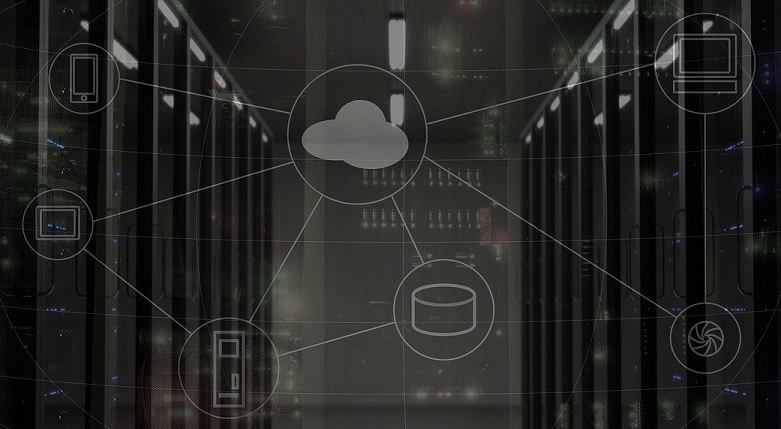

Frustration sets in for end-users who experience issues that are not proactively addressed. Customers may choose a competing service and internal customers will be less productive, resulting in a negative impact to the organization's top and bottom lines. IT personnel also get frustrated while troubleshooting and resolving issues under pressure. Proactively assuring performance using predictive and prescriptive analytics driven by data from monitoring is the ideal way to assure experiences because it averts poor experiences as well as time-consuming, costly and frustrating troubleshooting and problem solving.

Experiences with applications that are directly impacted by network performance can be grouped into the following three high-level categories:

Connectivity determines whether end-users and other processes including automation can access an application.

Responsiveness is either a quantitative or subjective measure of acceptability of the interactions with an application. For example, a target of receiving a response within one second is acceptable for many use cases.

Quality is another quantitative or subjective measure of acceptability. For example, a videoconference session that has delays, dropouts and other noticeable issues would be rated as poor quality.

Assuring Exceptional Experiences are Driving Performance Upgrades

High performance is often the way to assure responsiveness and quality. High performance often means increased processing speed that is reliant on data transmission speed, especially for processing intensive applications and streaming applications. Network throughput rates increase in steps. Currently the typical data rates are 10Gbps, 40Gbps, and 100Gbps. The need for performance and hence speed is driving upgrades of data center network data rates and corresponding monitoring to operate at 100Gbps.

High fidelity visibility and observability of the IT system's performance metrics are needed to manage and maximize user experiences. As data center networks continue migrating to 100Gbps data rates, monitoring resolution must keep pace.

Finding the Root Cause of Experience Issues

Customer support and IT help desks receive trouble tickets when performance issues occur. Tickets initiate an effort to resolve issues and start a timer that measures the mean time to resolution (MTTR) - a common metric used to gauge IT performance. Maintaining a low MTTR is a direct indicator of IT effectiveness and efficiency and an indirect indicator of customer satisfaction. The typical next steps include escalating the issue to specific roles and personnel within the IT team to isolate the root cause by first determining whether the problem is with the network or the application.

Investigating requires analyzing specific observable network and application behaviors and metrics. There are several entities and links between an end-user and an application that could cause connectivity issues if they malfunction. These include: the end-user's device, one or more networks (i.e., WAN, LAN, WLAN, DCN), the servers and other IT infrastructure hosting the application, and the application itself including underlying microservices and other software components.

Connectivity Issues

Let's look at a situation where network connectivity is inhibiting an employee's ability to access a custom application running within an organization's data center. The inability to access the application could be caused by a malfunction of the following connectivity stages:

■ Identity and Access Management

■ DHCP

■ DNS

■ Connectivity with the application server(s)

In such cases, investigator(s) should look at observable health and performance metrics in hopes of quickly isolating the problem. Using event logs, Ping, and Internet Control Message Protocol are quick ways to discover the root cause of connectivity issues. If no problems are found, the investigator(s) can dig deeper by analyzing network packet data to examine observed traffic and SYN/SYN ACK errors to determine if exchanges including TCP/IP handshakes at each of the connectivity stages listed above are working properly.

Go to: Assuring Exceptional Experiences with Applications Requires Assuring Network Performance - Part 2.

Nadeem Zahid is VP of Product Management & Marketing at cPacket Networks

Hot Topics

The Latest

Performance bottlenecks aren't uncommon when it comes to rolling out new technology, regardless of how capable or game-changing that technology might be. Every generation of new tech has encountered roadblocks that had to be overcome before it was truly able to shine. Virtualization forced organizations to rethink resource allocation, cloud transformation had us shift our focus toward scalability and elasticity, and microservices introduced entirely new challenges around observability and distributed systems. There's something different about AI, however ...

Consider a single order represented across order-management, execution, and settlement systems. Each database, message broker, and application may be online and processing its own records correctly. Yet the workflow has failed if related events arrive on different clocks, rely on inconsistent state, or cannot be reconciled before an operational decision must be made ...

AI now exists in almost every IT workflow. In a recent survey of more than 800 IT service professionals, all respondents indicated the use of AI in some form within their organization. But there's a growing paradox: if dashboards are clearing faster and alerts are resolved at unprecedented speed, why aren't IT service desks reporting lighter workloads? The research found that 71% of IT teams said their actual workload has remained flat or increased since adopting AI. This reality appears to contradict what we’ve been told about AI ...

Two years ago, almost every customer conversation about AI started with the same questions: Which model should we use? What can it do? Is it ready for the enterprise? Today, those discussions have moved on. CIOs are far more interested in how to govern AI, integrate it with existing systems, prepare their workforce and make it part of everyday operations. The challenge is no longer to prove that AI can deliver value. It's instead about how to embed AI into the business in a way that's secure, scalable and delivers measurable outcomes ...

Two things happened to production incidents between 2023 and now, and they did not happen at the same speed. The first is that a class of dependency that barely existed three years ago now accounts for one incident in ten. Incidents disclosed by AI model and AI application providers rose from 1.7% of all disclosed unplanned incidents in 2023 to 10.7% in 2026 year to date, roughly a sixfold rise; that counts only incidents at AI companies themselves, so the true share is higher. The second is that the time to close an incident has not come down ...

When an AI assistant gives an incomplete or incorrect answer, teams often blame the model. They adjust prompts, switch models, increase context windows or test a new retrieval strategy. However the model may not be a problem. In many enterprise AI workflows, the problem begins inside the document-ingestion pipeline ...

If you talk to any security or observability teams right now, they're all fighting the same fire: their tooling was built to ingest X, but their sources are pumping Y and soon to be doing Z. The knee-jerk reaction is always the same: we need more platform. However, this reaction is wrong. Let me explain why, because the solution to this problem is foundational, not financial. Instead of hurling yet more money at the problem, make sure you've done what's needed upstream ...

Rapid AI adoption and the unique ways AI workloads operate is redefining the scope and structure of what these teams must deliver. This shift is forcing organizations to rethink how they manage scale, automation, and control, according to The State of SRE and Platform Engineering 2026, a new report from Dynatrace ...

AI is usually talked about as a software tool, but it also depends heavily on the network behind it. Whether a company is using AI for chatbots, automation, monitoring, analytics, or employee support, all of that information has to move across the network in a reliable and secure way. That means AI is not just an application decision. It is also an infrastructure decision. Before organizations rush into AI, they should ask a simple question: Is our network ready to support it? ...

Enterprise AI often lacks governed access to where business processes actually execute. Without that access, AI agents may be able to reason, but they cannot operate reliably across enterprise workflows. For AI agents to effectively carry out workflows, they will require integration-layer context and controls. Organizations can implement these prerequisites by providing AI with managed access to the middleware layer ...

Assuring Exceptional Experiences with Applications Requires Assuring Network Performance - Part 1

Nadeem Zahid
cPacket Networks

Network Performance Management and Diagnostics is an important aspect of Application Performance Management because application performance and experiences are intertwined with network performance. Networks connect end-users with applications; they also connect application components such as application servers and database servers, microservices, and IoT devices.

Experiences with enterprise and web-based (SaaS) applications by internal and external end-users directly impact an organization's success. These experiences may be formally specified with measurable metrics (for example, payment transaction response times) in a Service Level Experience (SLE). Externally, experiences impact customer satisfaction, retention and lifetime value. Within the organization, experiences affect employee satisfaction and productivity, including IT efficiency. Experiences also matter to automated processes, especially when specific timing tolerances are critical. Therefore, assuring exceptional experiences for all stakeholders and use cases is a critical success factor.


Frustration sets in for end-users who experience issues that are not proactively addressed. Customers may choose a competing service and internal customers will be less productive, resulting in a negative impact to the organization's top and bottom lines. IT personnel also get frustrated while troubleshooting and resolving issues under pressure. Proactively assuring performance using predictive and prescriptive analytics driven by data from monitoring is the ideal way to assure experiences because it averts poor experiences as well as time-consuming, costly and frustrating troubleshooting and problem solving.

Experiences with applications that are directly impacted by network performance can be grouped into the following three high-level categories:

Connectivity determines whether end-users and other processes including automation can access an application.

Responsiveness is either a quantitative or subjective measure of acceptability of the interactions with an application. For example, a target of receiving a response within one second is acceptable for many use cases.

Quality is another quantitative or subjective measure of acceptability. For example, a videoconference session that has delays, dropouts and other noticeable issues would be rated as poor quality.

Assuring Exceptional Experiences are Driving Performance Upgrades

High performance is often the way to assure responsiveness and quality. High performance often means increased processing speed that is reliant on data transmission speed, especially for processing intensive applications and streaming applications. Network throughput rates increase in steps. Currently the typical data rates are 10Gbps, 40Gbps, and 100Gbps. The need for performance and hence speed is driving upgrades of data center network data rates and corresponding monitoring to operate at 100Gbps.

High fidelity visibility and observability of the IT system's performance metrics are needed to manage and maximize user experiences. As data center networks continue migrating to 100Gbps data rates, monitoring resolution must keep pace.

Finding the Root Cause of Experience Issues

Customer support and IT help desks receive trouble tickets when performance issues occur. Tickets initiate an effort to resolve issues and start a timer that measures the mean time to resolution (MTTR) - a common metric used to gauge IT performance. Maintaining a low MTTR is a direct indicator of IT effectiveness and efficiency and an indirect indicator of customer satisfaction. The typical next steps include escalating the issue to specific roles and personnel within the IT team to isolate the root cause by first determining whether the problem is with the network or the application.

Investigating requires analyzing specific observable network and application behaviors and metrics. There are several entities and links between an end-user and an application that could cause connectivity issues if they malfunction. These include: the end-user's device, one or more networks (i.e., WAN, LAN, WLAN, DCN), the servers and other IT infrastructure hosting the application, and the application itself including underlying microservices and other software components.

Connectivity Issues

Let's look at a situation where network connectivity is inhibiting an employee's ability to access a custom application running within an organization's data center. The inability to access the application could be caused by a malfunction of the following connectivity stages:

■ Identity and Access Management

■ DHCP

■ DNS

■ Connectivity with the application server(s)

In such cases, investigator(s) should look at observable health and performance metrics in hopes of quickly isolating the problem. Using event logs, Ping, and Internet Control Message Protocol are quick ways to discover the root cause of connectivity issues. If no problems are found, the investigator(s) can dig deeper by analyzing network packet data to examine observed traffic and SYN/SYN ACK errors to determine if exchanges including TCP/IP handshakes at each of the connectivity stages listed above are working properly.

Go to: Assuring Exceptional Experiences with Applications Requires Assuring Network Performance - Part 2.

Nadeem Zahid is VP of Product Management & Marketing at cPacket Networks

Hot Topics

The Latest

Performance bottlenecks aren't uncommon when it comes to rolling out new technology, regardless of how capable or game-changing that technology might be. Every generation of new tech has encountered roadblocks that had to be overcome before it was truly able to shine. Virtualization forced organizations to rethink resource allocation, cloud transformation had us shift our focus toward scalability and elasticity, and microservices introduced entirely new challenges around observability and distributed systems. There's something different about AI, however ...

Consider a single order represented across order-management, execution, and settlement systems. Each database, message broker, and application may be online and processing its own records correctly. Yet the workflow has failed if related events arrive on different clocks, rely on inconsistent state, or cannot be reconciled before an operational decision must be made ...

AI now exists in almost every IT workflow. In a recent survey of more than 800 IT service professionals, all respondents indicated the use of AI in some form within their organization. But there's a growing paradox: if dashboards are clearing faster and alerts are resolved at unprecedented speed, why aren't IT service desks reporting lighter workloads? The research found that 71% of IT teams said their actual workload has remained flat or increased since adopting AI. This reality appears to contradict what we’ve been told about AI ...

Two years ago, almost every customer conversation about AI started with the same questions: Which model should we use? What can it do? Is it ready for the enterprise? Today, those discussions have moved on. CIOs are far more interested in how to govern AI, integrate it with existing systems, prepare their workforce and make it part of everyday operations. The challenge is no longer to prove that AI can deliver value. It's instead about how to embed AI into the business in a way that's secure, scalable and delivers measurable outcomes ...

Two things happened to production incidents between 2023 and now, and they did not happen at the same speed. The first is that a class of dependency that barely existed three years ago now accounts for one incident in ten. Incidents disclosed by AI model and AI application providers rose from 1.7% of all disclosed unplanned incidents in 2023 to 10.7% in 2026 year to date, roughly a sixfold rise; that counts only incidents at AI companies themselves, so the true share is higher. The second is that the time to close an incident has not come down ...

When an AI assistant gives an incomplete or incorrect answer, teams often blame the model. They adjust prompts, switch models, increase context windows or test a new retrieval strategy. However the model may not be a problem. In many enterprise AI workflows, the problem begins inside the document-ingestion pipeline ...

If you talk to any security or observability teams right now, they're all fighting the same fire: their tooling was built to ingest X, but their sources are pumping Y and soon to be doing Z. The knee-jerk reaction is always the same: we need more platform. However, this reaction is wrong. Let me explain why, because the solution to this problem is foundational, not financial. Instead of hurling yet more money at the problem, make sure you've done what's needed upstream ...

Rapid AI adoption and the unique ways AI workloads operate is redefining the scope and structure of what these teams must deliver. This shift is forcing organizations to rethink how they manage scale, automation, and control, according to The State of SRE and Platform Engineering 2026, a new report from Dynatrace ...

AI is usually talked about as a software tool, but it also depends heavily on the network behind it. Whether a company is using AI for chatbots, automation, monitoring, analytics, or employee support, all of that information has to move across the network in a reliable and secure way. That means AI is not just an application decision. It is also an infrastructure decision. Before organizations rush into AI, they should ask a simple question: Is our network ready to support it? ...

Enterprise AI often lacks governed access to where business processes actually execute. Without that access, AI agents may be able to reason, but they cannot operate reliably across enterprise workflows. For AI agents to effectively carry out workflows, they will require integration-layer context and controls. Organizations can implement these prerequisites by providing AI with managed access to the middleware layer ...