
Growing Numbers of Cloud Apps Still Face Performance Challenge

Are IT teams equipped to fully embrace cloud apps and services?
Patrick Carey

The good news - Cloud apps and services continue to gain traction in enterprises with both business users and IT departments. The trend is being driven by much more than cost savings too.

The bad - Big obstacles still remain including a lack of confidence about service performance and availability, a lack of management tools and continuing concerns about data security.

These observations come from a recent survey of over 200 business executives and IT managers in North America to better understand their current and planned use of cloud-based applications and services, the drivers behind cloud adoption, and the obstacles that stand in their way. Some of the highlights include:

Both Businesses and IT Teams Plan to Use Cloud Apps

Both business and IT users surveyed indicated a major role for both Infrastructure as a Service (IaaS) and Software as a Service (SaaS) models in their future IT plans. To date, much of the usage of cloud apps has been driven by business users.

IaaS Dominates Today, But SaaS Adoption is Catching Up

While IaaS offerings like Amazon Web Services and Microsoft Azure represent a larger share of the cloud pie today, SaaS offerings are gaining ground. This includes expanding the use of established SaaS applications like Salesforce.com as well as deploying newer offerings such as Microsoft Office 365, Google Apps and Dropbox as core applications for most employees.

Cloud Use is Being Driven by More Than Cost Savings

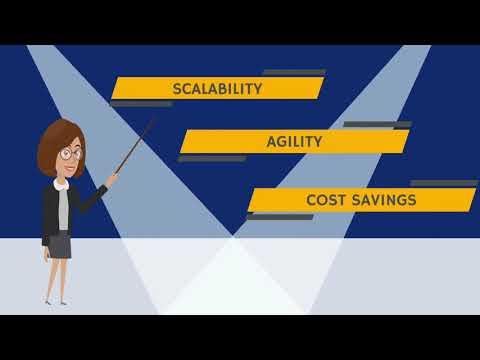
The CapEx and OpEx benefits of cloud services are clearly understood and well documented, but adoption today is being driven by the operational agility and flexibility advantages more so than the cost benefits. The ability to deploy new services quickly and reconfigure them easily as the needs of the business change is becoming critical.

As Cloud Adoption Gains, IT Roles and Responsibilities Shift

The requirements in a cloud-based environment shift from managing apps and supporting infrastructure to coordinating and ensuring the availability of the services business users need to do their jobs. The challenge is how to manage and assure app service levels and data security for users when they don't have the same control over cloud-based services that they have over on-premise applications.

Security Concerns and Lack of IT Visibility Hamper Adoption

The biggest obstacles to cloud adoption are security concerns and a lack of confidence in app/service performance and availability. Related to this, over 40% of respondents indicate that their IT team has no tools to monitor and manage their cloud apps. Just 17% of respondents feel like their existing tools do a good job managing and monitoring their cloud-based apps.

What Should We Take From This?

It's no surprise that data security remains a primary concern with cloud deployments. Although the major service providers implement security measures that are more sophisticated than those in place within most business datacenters, businesses remain wary of the risks of storing their sensitive data in the cloud.

What may be surprising to the readers of APMdigest is the concern over cloud app performance and availability and the lack of good cloud management tools.

IT teams adopting cloud apps often find themselves in a challenging position today. Their users and business management still look to them to "own" application availability and performance even though they no longer own the application hosting environment. Unfortunately, the tools they use to manage their on-premise applications don't give them the same visibility and control in the cloud. This issue is further highlighted by the fact that nearly two-thirds of respondents indicate that their IT team either has no tools to monitor and manage their cloud apps or they simply rely on whatever health dashboard is available from their cloud service providers.

This data suggests a significant gap in systems management. Traditional tools, which have relied on direct access to servers, network equipment, log files, and APIs, are unable to effectively support cloud apps and services that do not expose those interfaces. Network management tools address part of the problem by focusing on network health, but they too are often limited in their visibility outside the company firewall and generally unable to provide insight into application/service health.

When asked how well the tools they use today address their cloud app monitoring and management needs, over 75% of the respondents indicated that they are at best, ambivalent about the tools. And more respondents feel their tools are not up to the task than feel they are.

Most mature systems management and monitoring solutions on the market today have evolved alongside the on-premise applications, operating systems, server and network infrastructure they have been used to manage. Organizations are now realizing how profoundly a cloud-centric IT architecture differs from their legacy on-premise architectures and with that how different their management and monitoring needs will be going forward. This is the key to driving cloud adoption in the enterprise and enabling businesses to take full advantage of all it has to offer.

Patrick Carey is VP Product Management & Marketing at Exoprise.

Hot Topics

The Latest

For decades, enterprise networks were designed around a simple assumption: work happened inside the office. Applications lived in centralized data centers, employees connected through internal infrastructure, and security focused on protecting the perimeter that surrounded everything ... But the way organizations operate today bears little resemblance to that environment. Cloud platforms host critical applications, employees connect from homes and airports as often as they do from offices, and partners collaborate through shared systems that exist far beyond corporate walls. In short, the corporate network no longer resembles the environment it was designed to protect ...

As an analyst who researches how IT organizations design, build, and operate their networks, I find that network data is a constant source of pain. Network teams struggle with data quality, fragmentation, authority, access, and trust. And these issues undermine everything they try to do. Here are the numbers: Only 45% of network teams are completely confident in the accuracy of their network source of truth, which documents the intent of their network ...

The 2026 Global Data Center Survey from Uptime Institute reveals an industry navigating workforce constraints, escalating outage expenses, even as rising costs remain the top concern for management teams ...

The next observability gap may not be in the code. It may be under the rack. That sounds strange until you think about how AI incidents actually feel in the middle of an investigation ... The application dashboard may be accurate. It may also be stopping at the wrong boundary. AI systems depend on software, but they also depend on a dense physical stack: racks, power paths, thermal margin, maintenance activity and, in many environments, liquid cooling. Those physical dependencies can change slowly before they look like a software incident ...

Certificate expiration is the rare outage you can see coming. Every TLS certificate carries the date it stops working, so the moment it will begin breaking connections is knowable in advance. That's what makes an expired certificate such a frustrating way to lose a service. What's changing now is how often that date comes around ...

Enterprises operate different combinations of workloads across cloud, hybrid and multicloud environments. For business-critical workloads, teams need to consider monitoring and observability early so they can detect health issues, investigate failures, and understand operational impact. Organizations place workloads on cloud platforms based on a combination of technical requirements, economics, existing dependencies, organizational standards, and business priorities. Their monitoring priorities therefore depend on what they operate and where those systems run. Those priorities will not look the same for every organization ...

Top-performing businesses prioritize data-driven decision making, enabling leaders to move from intuition and gut feel towards evidence-based judgment. But that judgment is only sound when the data underpinning decisions is accurate. With incident management, data accuracy is particularly important. Long-term revenue, customer trust, and operational stability depend on high-quality data that enables teams to quickly identify and address the root cause of major incidents. Against this backdrop, governance becomes a critical endeavor to ensure the right data drives the right action ...

In MEAN TIME TO INSIGHT Episode 26, Shamus McGillicuddy, VP of Research, Network Infrastructure and Operations, at EMA discusses network compliance ... 

Most production autonomous agents do not run in a vacuum. They run inside cloud infrastructure: virtual machines, containers, pods, managed clusters or private servers. That is where most operations teams start monitoring. Is the VM alive? Is the container running? Did the pod restart? Is memory stable? Is CPU too high? Did the health check pass? Those signals are useful. They tell you whether the shell around the agent is alive. They do not tell you whether the agent inside is actually operational ...

Enterprise IT environments have never been more observable ... Yet many organizations still grapple with outages, lengthy incident resolution cycles, and increasing complexity. Most teams do not suffer from a shortage of data. They struggle to determine what deserves attention and what action to take next ... Enterprise IT operations must move beyond monitoring and visibility. The next stage of maturity is decision operations, an approach that helps teams make faster, better-informed decisions ...

Growing Numbers of Cloud Apps Still Face Performance Challenge

Are IT teams equipped to fully embrace cloud apps and services?
Patrick Carey

The good news - Cloud apps and services continue to gain traction in enterprises with both business users and IT departments. The trend is being driven by much more than cost savings too.

The bad - Big obstacles still remain including a lack of confidence about service performance and availability, a lack of management tools and continuing concerns about data security.

These observations come from a recent survey of over 200 business executives and IT managers in North America to better understand their current and planned use of cloud-based applications and services, the drivers behind cloud adoption, and the obstacles that stand in their way. Some of the highlights include:

Both Businesses and IT Teams Plan to Use Cloud Apps

Both business and IT users surveyed indicated a major role for both Infrastructure as a Service (IaaS) and Software as a Service (SaaS) models in their future IT plans. To date, much of the usage of cloud apps has been driven by business users.

IaaS Dominates Today, But SaaS Adoption is Catching Up

While IaaS offerings like Amazon Web Services and Microsoft Azure represent a larger share of the cloud pie today, SaaS offerings are gaining ground. This includes expanding the use of established SaaS applications like Salesforce.com as well as deploying newer offerings such as Microsoft Office 365, Google Apps and Dropbox as core applications for most employees.

Cloud Use is Being Driven by More Than Cost Savings

The CapEx and OpEx benefits of cloud services are clearly understood and well documented, but adoption today is being driven by the operational agility and flexibility advantages more so than the cost benefits. The ability to deploy new services quickly and reconfigure them easily as the needs of the business change is becoming critical.

As Cloud Adoption Gains, IT Roles and Responsibilities Shift

The requirements in a cloud-based environment shift from managing apps and supporting infrastructure to coordinating and ensuring the availability of the services business users need to do their jobs. The challenge is how to manage and assure app service levels and data security for users when they don't have the same control over cloud-based services that they have over on-premise applications.

Security Concerns and Lack of IT Visibility Hamper Adoption

The biggest obstacles to cloud adoption are security concerns and a lack of confidence in app/service performance and availability. Related to this, over 40% of respondents indicate that their IT team has no tools to monitor and manage their cloud apps. Just 17% of respondents feel like their existing tools do a good job managing and monitoring their cloud-based apps.

What Should We Take From This?

It's no surprise that data security remains a primary concern with cloud deployments. Although the major service providers implement security measures that are more sophisticated than those in place within most business datacenters, businesses remain wary of the risks of storing their sensitive data in the cloud.

What may be surprising to the readers of APMdigest is the concern over cloud app performance and availability and the lack of good cloud management tools.

IT teams adopting cloud apps often find themselves in a challenging position today. Their users and business management still look to them to "own" application availability and performance even though they no longer own the application hosting environment. Unfortunately, the tools they use to manage their on-premise applications don't give them the same visibility and control in the cloud. This issue is further highlighted by the fact that nearly two-thirds of respondents indicate that their IT team either has no tools to monitor and manage their cloud apps or they simply rely on whatever health dashboard is available from their cloud service providers.

This data suggests a significant gap in systems management. Traditional tools, which have relied on direct access to servers, network equipment, log files, and APIs, are unable to effectively support cloud apps and services that do not expose those interfaces. Network management tools address part of the problem by focusing on network health, but they too are often limited in their visibility outside the company firewall and generally unable to provide insight into application/service health.

When asked how well the tools they use today address their cloud app monitoring and management needs, over 75% of the respondents indicated that they are at best, ambivalent about the tools. And more respondents feel their tools are not up to the task than feel they are.

Most mature systems management and monitoring solutions on the market today have evolved alongside the on-premise applications, operating systems, server and network infrastructure they have been used to manage. Organizations are now realizing how profoundly a cloud-centric IT architecture differs from their legacy on-premise architectures and with that how different their management and monitoring needs will be going forward. This is the key to driving cloud adoption in the enterprise and enabling businesses to take full advantage of all it has to offer.

Patrick Carey is VP Product Management & Marketing at Exoprise.

Hot Topics

The Latest

For decades, enterprise networks were designed around a simple assumption: work happened inside the office. Applications lived in centralized data centers, employees connected through internal infrastructure, and security focused on protecting the perimeter that surrounded everything ... But the way organizations operate today bears little resemblance to that environment. Cloud platforms host critical applications, employees connect from homes and airports as often as they do from offices, and partners collaborate through shared systems that exist far beyond corporate walls. In short, the corporate network no longer resembles the environment it was designed to protect ...

As an analyst who researches how IT organizations design, build, and operate their networks, I find that network data is a constant source of pain. Network teams struggle with data quality, fragmentation, authority, access, and trust. And these issues undermine everything they try to do. Here are the numbers: Only 45% of network teams are completely confident in the accuracy of their network source of truth, which documents the intent of their network ...

The 2026 Global Data Center Survey from Uptime Institute reveals an industry navigating workforce constraints, escalating outage expenses, even as rising costs remain the top concern for management teams ...

The next observability gap may not be in the code. It may be under the rack. That sounds strange until you think about how AI incidents actually feel in the middle of an investigation ... The application dashboard may be accurate. It may also be stopping at the wrong boundary. AI systems depend on software, but they also depend on a dense physical stack: racks, power paths, thermal margin, maintenance activity and, in many environments, liquid cooling. Those physical dependencies can change slowly before they look like a software incident ...

Certificate expiration is the rare outage you can see coming. Every TLS certificate carries the date it stops working, so the moment it will begin breaking connections is knowable in advance. That's what makes an expired certificate such a frustrating way to lose a service. What's changing now is how often that date comes around ...

Enterprises operate different combinations of workloads across cloud, hybrid and multicloud environments. For business-critical workloads, teams need to consider monitoring and observability early so they can detect health issues, investigate failures, and understand operational impact. Organizations place workloads on cloud platforms based on a combination of technical requirements, economics, existing dependencies, organizational standards, and business priorities. Their monitoring priorities therefore depend on what they operate and where those systems run. Those priorities will not look the same for every organization ...

Top-performing businesses prioritize data-driven decision making, enabling leaders to move from intuition and gut feel towards evidence-based judgment. But that judgment is only sound when the data underpinning decisions is accurate. With incident management, data accuracy is particularly important. Long-term revenue, customer trust, and operational stability depend on high-quality data that enables teams to quickly identify and address the root cause of major incidents. Against this backdrop, governance becomes a critical endeavor to ensure the right data drives the right action ...

In MEAN TIME TO INSIGHT Episode 26, Shamus McGillicuddy, VP of Research, Network Infrastructure and Operations, at EMA discusses network compliance ... 

Most production autonomous agents do not run in a vacuum. They run inside cloud infrastructure: virtual machines, containers, pods, managed clusters or private servers. That is where most operations teams start monitoring. Is the VM alive? Is the container running? Did the pod restart? Is memory stable? Is CPU too high? Did the health check pass? Those signals are useful. They tell you whether the shell around the agent is alive. They do not tell you whether the agent inside is actually operational ...

Enterprise IT environments have never been more observable ... Yet many organizations still grapple with outages, lengthy incident resolution cycles, and increasing complexity. Most teams do not suffer from a shortage of data. They struggle to determine what deserves attention and what action to take next ... Enterprise IT operations must move beyond monitoring and visibility. The next stage of maturity is decision operations, an approach that helps teams make faster, better-informed decisions ...