Companies today waste too much time on fragmented tool functionality. The infographic below, based on an Enterprise Management Associates (EMA) study, shows the current state of monitoring tool use.
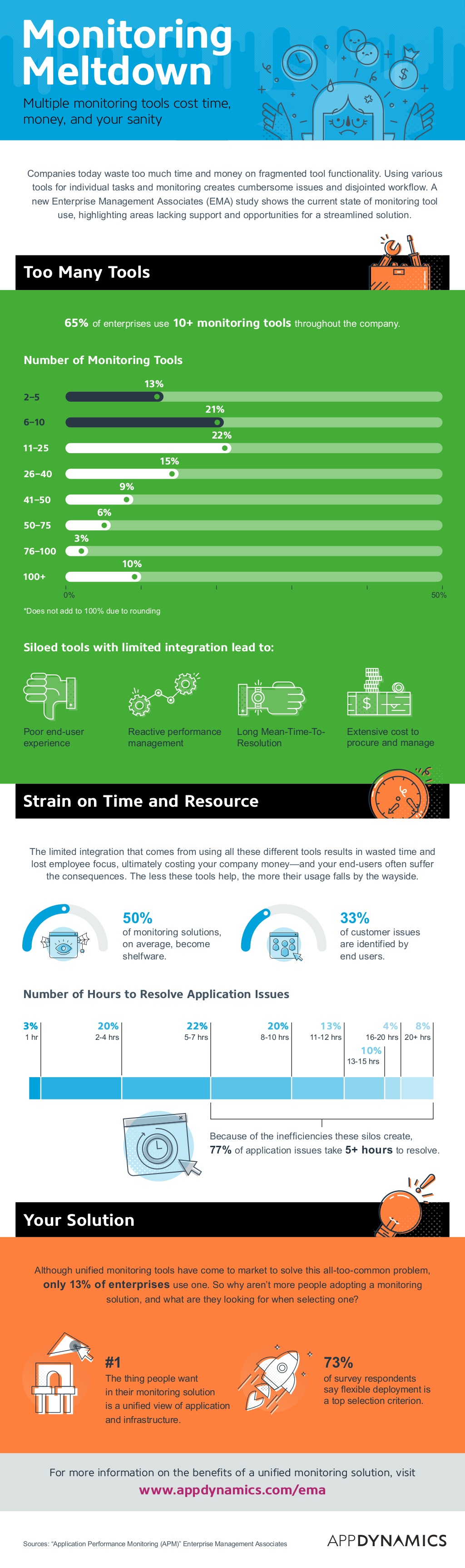

Companies today waste too much time on fragmented tool functionality. The infographic below, based on an Enterprise Management Associates (EMA) study, shows the current state of monitoring tool use.
Enterprises today operate in a real-time environment where uninterrupted access to trusted data has become a baseline expectation for users, applications and automated systems. Traditional DataOps models, built on manual effort and human triage, cannot keep pace with this always active demand. AI agents are emerging as the operational backbone, ensuring consistent data availability, reinforcing trustworthiness and enabling a level of scale that manual processes cannot achieve ...
For decades, trust in the digital workplace rested on familiar signals. We trusted faces on video calls, voices on the phone, and emails that appeared to come from people we knew. These cues felt human and intuitive. They anchored how decisions were made, approvals were granted, and access was authorized. AI-powered deepfakes have quietly broken that model ...
Cloud migration was supposed to be a one-way door. For most enterprises, it turns out it isn't. Cloud data repatriation is a real and growing trend. A new survey ... finds that 89% of organizations plan to expand their on-premises infrastructure footprint over the next two years — and 75% have already moved at least some workloads back from public cloud in the past 24 months. The findings point to a broad rethinking of where data belongs ...
Over the past few years, large language models (LLMs) have revolutionized the software industry. Given their ability to excel at multi-step reasoning, LLMs have helped enterprises streamline workflows and adapt to the unknown. However, employing such models comes with sky-high costs, latency issues, and limited flexibility. In the realm of IT operations, it is generally wiser to employ smaller, domain-specific models instead ...
For years, DevOps teams operated under a simple assumption: collect enough telemetry, and you can find and fix any problem. That assumption is breaking down. Modern enterprises now operate across microservices, hybrid cloud environments, APIs, Kubernetes, and highly automated delivery pipelines. Releases happen continuously, dependencies shift constantly, and failures spread faster than teams can diagnose them ...
Companies today waste too much time on fragmented tool functionality. The infographic below, based on an Enterprise Management Associates (EMA) study, shows the current state of monitoring tool use.
Enterprises today operate in a real-time environment where uninterrupted access to trusted data has become a baseline expectation for users, applications and automated systems. Traditional DataOps models, built on manual effort and human triage, cannot keep pace with this always active demand. AI agents are emerging as the operational backbone, ensuring consistent data availability, reinforcing trustworthiness and enabling a level of scale that manual processes cannot achieve ...
For decades, trust in the digital workplace rested on familiar signals. We trusted faces on video calls, voices on the phone, and emails that appeared to come from people we knew. These cues felt human and intuitive. They anchored how decisions were made, approvals were granted, and access was authorized. AI-powered deepfakes have quietly broken that model ...
Cloud migration was supposed to be a one-way door. For most enterprises, it turns out it isn't. Cloud data repatriation is a real and growing trend. A new survey ... finds that 89% of organizations plan to expand their on-premises infrastructure footprint over the next two years — and 75% have already moved at least some workloads back from public cloud in the past 24 months. The findings point to a broad rethinking of where data belongs ...
Over the past few years, large language models (LLMs) have revolutionized the software industry. Given their ability to excel at multi-step reasoning, LLMs have helped enterprises streamline workflows and adapt to the unknown. However, employing such models comes with sky-high costs, latency issues, and limited flexibility. In the realm of IT operations, it is generally wiser to employ smaller, domain-specific models instead ...
For years, DevOps teams operated under a simple assumption: collect enough telemetry, and you can find and fix any problem. That assumption is breaking down. Modern enterprises now operate across microservices, hybrid cloud environments, APIs, Kubernetes, and highly automated delivery pipelines. Releases happen continuously, dependencies shift constantly, and failures spread faster than teams can diagnose them ...